

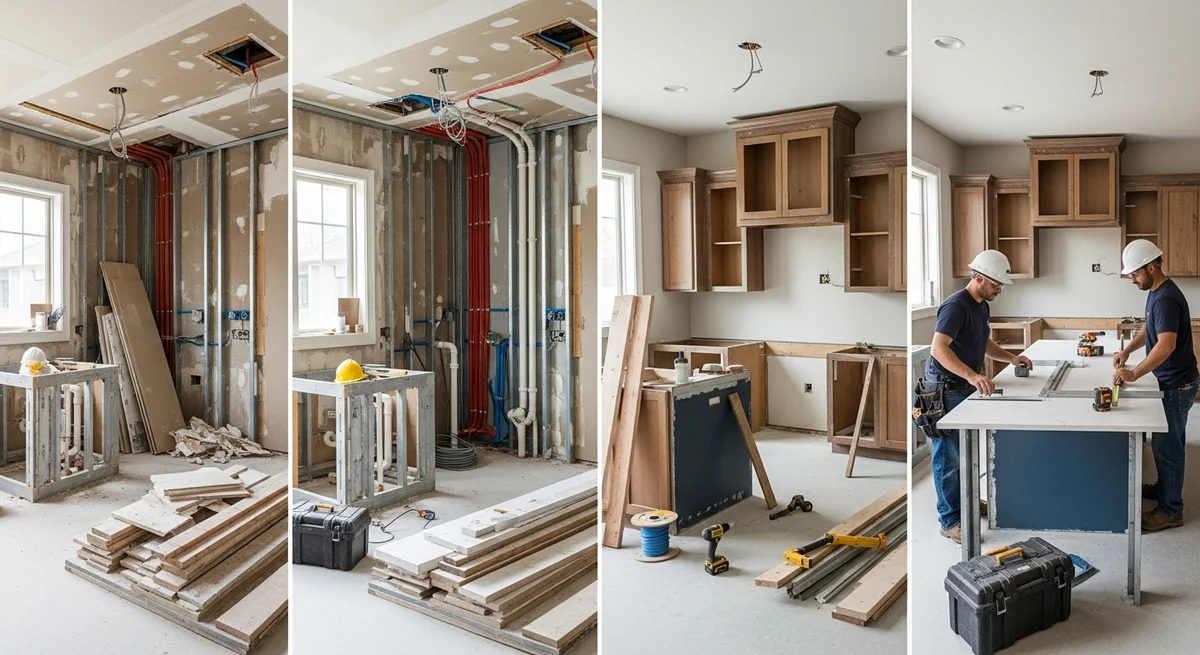
Key Takeaways
- Order custom cabinets 12–16 weeks before demolition and high-end appliances 8+ weeks ahead, since late deliveries are the most common cause of renovation delays.
- Follow the correct renovation sequence: demo → rough plumbing/electrical → drywall → flooring → cabinets → countertops → backsplash → appliances → final connections.
- Install hardwood flooring before cabinets for a seamless look, but place tile and LVP after cabinets to save material costs and simplify future replacements.
- Never skip rough-in inspections—passing code for electrical, plumbing, and structural work protects your family and prevents costly teardowns later.
The right order for renovating a kitchen starts with demolition, then runs electrical and plumbing, installs drywall, lays flooring, sets cabinets, templates countertops, adds backsplash, and finishes with appliances. Skip steps or do them backward and you face delays, extra costs, and poor results. This guide walks through every phase in the correct sequence so your Northern Virginia kitchen remodel goes smoothly from start to finish.
Planning matters most. Order your cabinets and appliances months ahead. Long lead times on custom items can stop your whole project. Permits take weeks to get approved. Your temporary kitchen setup needs thought too. But once demo day arrives, the physical work follows a clear pattern. Each step builds on the one before it. Miss the order and you create problems.
Planning and Ordering Before Demo Day
Start ordering major materials three to six months before demolition. Custom cabinets take the longest. Some cabinet makers need 12 to 16 weeks from order to delivery. High-end appliances can take eight weeks or more. Stone countertops need two to three weeks after templating.
Mayflower Kitchen and Bath helps Northern Virginia homeowners coordinate these timelines during the design phase. The team orders everything early so materials arrive when needed, not weeks late. Vienna, Fairfax, and McLean projects run smoother with proper planning.
Permits come next. Your contractor handles this, but the process takes time. Some Northern Virginia jurisdictions approve permits in days. Others take weeks. Electrical changes, plumbing moves, and structural work all need permits. Start this process early.
Set up your temporary kitchen before demo starts. You need a way to prepare food for weeks or months. A microwave, mini fridge, and coffee maker in another room work for many families. Some people use their grill outside. Plan this out or budget for eating out often.
Demolition Comes First
Demo day kicks off the physical work. Everything old gets removed. Cabinets come down. Old countertops break apart. Appliances get disconnected and hauled out. Flooring gets ripped up if you're replacing it.
This phase takes one to three days for most kitchens. Larger spaces or tricky removals take longer. Contractors need to shut off water and power before starting. They also arrange for a dumpster to haul away debris.
Surprises happen during demo. Hidden water damage shows up behind cabinets. Old wiring doesn't meet current code. Structural issues appear. Good contractors plan extra time and budget for these discoveries. Fixing problems now prevents bigger issues later.
Northern Virginia homes built before 1980 might contain asbestos or lead paint. Testing and proper removal add days to the timeline. Safety comes first. Licensed professionals handle hazardous materials according to local regulations.
Rough-In Work: Electrical, Plumbing, and HVAC
Rough-in work happens after demo clears the space. This phase installs the bones of your new kitchen. Electrical wiring runs to new locations. Plumbing pipes get rerouted for sink and appliance placement. HVAC vents move if needed.
Electrical work takes two to four days for most projects. Electricians add outlets, upgrade circuits, and install wiring for hardwired appliances. Code requires GFCI outlets near water sources. Under-cabinet lighting gets wired now too. Older homes often need panel upgrades to handle modern appliance loads.
Plumbing rough-in happens at the same time. Moving a sink costs more than keeping it in place. New dishwasher and refrigerator ice maker lines run during this phase. Gas lines for ranges require licensed plumbers. Any drain relocations happen now before walls close up.
Rough-in inspections follow this work. The inspector checks that everything meets code. Passing inspection lets you move forward. Failing means fixing issues before continuing. Never skip inspections. They protect your home and family.
Framing Changes and Insulation
Structural changes happen during the rough-in phase. Removing walls opens up space. Adding walls creates storage or pantries. New windows bring in light. Each change requires proper framing.
Support beams replace load-bearing walls. Posts and headers carry weight that walls once held. This work needs engineering approval and careful installation. Rushing here creates serious problems.
Insulation goes in after framing passes inspection. Wall insulation improves energy efficiency. It also reduces noise from appliances. Spray foam or batt insulation both work. The choice depends on your budget and goals.
Drywall Installation and Finishing
Drywall goes up after rough-in work passes inspection. Sheets attach to wall studs and ceiling joists. Corners get taped. Seams get mudded and sanded smooth. This process takes several days because mud needs drying time between coats.
Good drywall finishing shows in the final result. Poorly done seams appear through paint. Uneven surfaces catch light wrong. Professional drywall installers create smooth walls ready for paint.
Prime the drywall before moving on. Primer seals the paper facing and protects it during the rest of construction. Cabinets, countertops, and appliances can scuff bare drywall. A coat of primer now saves touch-up work later.
When to Paint Walls
Painting happens in stages. Apply primer after drywall finishing. Wait to add final paint color until after cabinets install. This timing protects your finish from installation damage.
Some contractors paint before cabinets. Others paint after. The best approach primes first, installs cabinets and trim, then applies final paint coats. This method gives clean lines around cabinetry without risking damage to finished paint during installation.
Paint typically takes two to three days. Multiple coats dry between applications. Ceilings go first, then walls, finally trim. Keep rooms ventilated while paint dries.
Flooring Installation Timing
Flooring timing depends on the material you choose. Hardwood and tile typically install before cabinets. Floating floors like vinyl or laminate install after cabinets.
Installing hardwood first creates a level surface for cabinets. The floor runs wall to wall. This makes future cabinet changes easier. You won't have missing floor sections if you reconfigure later. Hardwood takes three to five days to install. Allow extra time for staining and finishing.
Tile can install before or after cabinets. Many contractors prefer tile first for the same reasons as hardwood. The continuous floor looks cleaner. But tile under cabinets costs more because you use more material. Some people tile only the visible areas to save money.
Floating floors must install after cabinets. These floors expand and contract with temperature and humidity. Cabinet weight prevents this movement. Trapped floating floors buckle and gap. Always install cabinets first when using floating floors.
Protect finished floors during cabinet installation. Cardboard or floor protectors prevent scratches from tools and heavy items. Most hardwood floors get their final finish coat after cabinet installation to repair any scuffs.
Cabinet Installation
Cabinets go in after flooring for most projects. This phase transforms the space. Your new kitchen layout becomes visible.
Cabinet installation takes three to five days for average kitchens. Base cabinets install first. Installers level them carefully because countertops sit on top. Wall cabinets go up next. Everything must be plumb and level for doors to work correctly.
Islands and specialty cabinets add complexity. Built-in features like wine racks or appliance garages need precise installation. Quality cabinet installers work methodically. Rushing creates problems with door alignment and drawer function.
Check that cabinet interiors are clean before installation. Some people store a few items even before countertops arrive. Make sure all cabinet parts arrived undamaged. Report problems immediately.
Countertop Templating and Installation
Countertops can't be measured until cabinets are installed. Templating happens one to three days after cabinet installation. A technician measures the exact cabinet layout and wall positions. These measurements go to the fabricator.
Fabrication takes one to three weeks depending on the material. Granite and quartz require cutting and polishing. Custom edges add time. Complex layouts with seams need careful planning.
Installation happens quickly once countertops arrive. Most installs take one day. The installers set slabs in place, seal seams, and attach them to cabinets. Cutouts for sinks and cooktops happen at the shop or on site.
Countertops must cure before use. Follow the fabricator's instructions. Some sealants need 24 hours. Others cure faster. Don't put weight on countertops until the adhesive sets fully.
When Backsplash Goes In
Backsplash installation follows countertops in almost every project. The countertop edge provides a clean starting line for tile or stone. This sequence ensures tight fits without gaps.
Tile backsplash takes two to four days. Setting tile takes one or two days. Grout needs 24 to 48 hours to cure. Sealing happens last. The process requires patience for proper drying times.
Stone slab backsplash installs with countertops. The same crew does both. Full-height backsplash behind ranges and sinks creates dramatic effects. This trend stays popular in Northern Virginia homes.
Wait for grout to cure completely before using the kitchen fully. Wet grout can stain or wash away. Protect your investment by following installation guidelines.
Plumbing and Electrical Finish Work
Finish plumbing and electrical work happen after countertops and backsplash. Plumbers install sinks and faucets. They connect dishwashers and ice makers. Everything gets tested for leaks.
Electricians add light fixtures and outlet covers. Under-cabinet lights get connected. Pendant lights over islands hang at the right height. All switches get installed and labeled.
This finish work typically takes one to two days. Coordinating plumbers and electricians prevents scheduling conflicts. Some work happens simultaneously in different parts of the kitchen.
Appliance Delivery and Installation
Appliances arrive near the end of the project. Coordinate delivery for after countertops install but before final touches. Most appliances install in one or two days.
Freestanding refrigerators and ranges simply slide into place. Built-in appliances need more work. Over-the-range microwaves attach to cabinets and walls. Dishwashers mount under countertops. Gas appliances require licensed technicians for connections.
Order appliances early but time delivery carefully. Storing appliances for weeks risks damage. They also take up space. Aim for delivery one week before installation day.
Test every appliance after installation. Run the dishwasher through a cycle. Check refrigerator temperatures. Confirm oven heating. Catch problems immediately while installers are still on site.
Hardware, Trim, and Final Details
Cabinet hardware installs near the end. Handles and knobs go on once everything else finishes. This prevents damage to decorative hardware during construction.
Trim work includes baseboards, crown molding, and window casings. These details frame your new kitchen. Paint or stain them to match your design. Installation typically takes one day.
Final paint touch-ups fix any scuffs from installation. Touch up around cabinets and appliances. The space should look pristine.
Final Inspection and Walkthrough
Schedule final inspections after all work completes. Electrical, plumbing, and sometimes mechanical inspections ensure everything meets code. Passing these inspections closes your permits.
Your contractor walkthrough happens last. Check every detail together. Test all appliances, faucets, and lights. Open every cabinet door and drawer. Note any issues for the punch list.
Most reputable contractors return within 30 days for a follow-up. They fix any items from the punch list. This ensures complete satisfaction with your new kitchen.
What Tasks Can Happen Simultaneously
Some work overlaps to save time. Electricians and plumbers often work at the same time during rough-in. Different trades can work in separate areas of large kitchens.
Cabinet installation and flooring sometimes happen together. One crew works on floors while another assembles cabinets in a different room. This requires coordination but cuts days from the timeline.
Paint prep can start while other trades finish up. Drywall repair and sanding happen as electricians add fixtures. Smart scheduling keeps multiple crews productive.
Never sacrifice quality for speed. Some steps must happen in order. Skipping ahead creates problems. Trust your contractor's schedule. They know which overlaps work safely.
Total Kitchen Remodel Timeline
Complete kitchen remodels take eight to twelve weeks on average. Smaller cosmetic updates finish faster. Complex projects with structural changes take longer.
Planning and ordering add two to three months before demo. This pre-construction time ensures materials arrive when needed. Skipping planning causes delays later.
Northern Virginia homes face seasonal considerations. Summer humidity affects drywall drying times. Winter weather can delay deliveries. Spring and fall often work best for major remodels.
Mayflower Kitchen and Bath provides detailed timelines during the planning phase. The team coordinates all trades and deliveries. This organization keeps projects on schedule from demo through final walkthrough.
Common Mistakes to Avoid
Starting demo before permits arrive creates problems. Work might not meet code. Inspections fail. You waste time and money fixing issues.
Ordering materials too late stops progress. Custom cabinets backordered for months delay everything. Appliances stuck in shipping warehouses create headaches. Order early, confirm delivery dates, and follow up regularly.
Installing flooring after painting causes damage. Protecting finished paint from flooring installation is difficult. The proper sequence prevents this issue.
Skipping the temporary kitchen setup makes remodeling miserable. Weeks without food prep space strains families. Plan ahead for basic cooking needs during construction.
Changing your mind mid-project adds time and cost. Decide on finishes before ordering materials. Changing tile after installation starts means delay and wasted materials. Stick to your plan.
Final Thoughts
Kitchen renovation order matters. Following the proper sequence prevents costly mistakes. Start with thorough planning and early ordering. Demo clears the space. Rough-in work installs systems. Inspections verify code compliance. Drywall and paint prepare surfaces. Flooring creates the foundation. Cabinets and countertops define the space. Backsplash and appliances finish the look.
Each phase depends on the one before it. Rushing or skipping steps creates problems. Quality contractors know the right order. They coordinate trades smoothly. The result is a beautiful, functional kitchen built to last.
Northern Virginia homeowners trust Mayflower Kitchen and Bath for properly sequenced kitchen remodels. The team's experience ensures every project follows the right order from start to finish. Ready to start your kitchen transformation? Visit the Vienna showroom to begin planning your perfectly timed renovation.
Frequently Asked Questions About Kitchen Renovation Order
What is the correct order of steps in a kitchen renovation?
The standard sequence is: finalize design and order all materials, demolition, rough framing and structural work, rough plumbing and gas lines, rough electrical, HVAC modifications, insulation, drywall and tape, prime and paint, flooring, cabinet installation, countertop templating, countertop installation, backsplash tile, finish plumbing and electrical, appliance installation, trim and hardware, and final inspection and walkthrough. Skipping or swapping steps almost always causes rework, delays, and added cost.
Do cabinets or flooring go in first during a kitchen remodel?
In most kitchen remodels, cabinets are installed before flooring — or flooring is run to the cabinet line only. This approach protects the flooring during heavy installation work and means you're not laying expensive hardwood or tile under base cabinets that will never be seen. The exception is continuous tile flooring that some designers prefer to run under base cabinets for a clean look — in that case, tile goes in first. Discuss the approach with your designer before ordering materials, since it affects how much flooring you need.
When does countertop templating happen in a kitchen remodel?
Countertop templating happens after cabinet installation is fully complete and all cabinets are level and secured. The fabricator visits to measure and template the exact dimensions for cutting. Fabrication then takes 1 to 2 weeks depending on the material and slab availability. Countertops are typically installed about 2 to 3 weeks after cabinet installation, before the backsplash goes in. Rushing this sequence — templating before cabinets are fully set — causes costly measurement errors that are expensive to correct.
What comes first in a kitchen remodel — rough plumbing or rough electrical?
Rough plumbing and rough electrical typically happen in the same phase, right after demolition and any structural framing. In practice, plumbers often work first to set drain locations and water supply rough-ins, then electricians run circuits and outlets. Both trades must finish their rough work before insulation and drywall can close the walls. Your general contractor coordinates the scheduling between trades — this sequencing is one of the core values of working with an experienced general contractor rather than managing subs yourself.
What are the most common mistakes homeowners make about kitchen renovation order?
The most frequent mistakes are: ordering countertops before cabinets are installed (causing measurement errors), scheduling flooring before heavy cabinet work is done (risking damage to the floor), starting demolition before all materials have arrived on-site (causing long delays when something is backordered), and installing appliances too early where they get damaged by subsequent trades. A good contractor prevents all of these with a detailed construction schedule — one of the first things to ask about when evaluating contractors.