July 3, 2026
How Much Does a Bathroom Remodel Cost in Northern Virginia? [2026 Guide]

BATHROOM


Key Takeaways
A master bathroom remodel in Northern Virginia costs between $30,000 and $150,000+, depending on scope. At the lower end, you can refresh finishes and fixtures without touching the layout. At the higher end, you get a full primary suite with relocated plumbing, custom cabinetry, premium tile, and high-end fixtures. This guide shows you where your money goes and what to expect at each budget level.
What Does a Master Bathroom Remodel Include?
A master bathroom remodel typically addresses four areas: layout and plumbing, surfaces and finishes, fixtures and features, and storage. The scope you choose determines your final cost.
Cosmetic remodels keep the existing layout and replace finishes: new tile, updated vanity, fresh paint, and upgraded fixtures. These projects start around $30,000 in Northern Virginia, where labor and material costs run 25 to 40 percent above national averages.
Mid-range remodels may include minor layout changes like expanding a shower or adding a second sink. Expect $50,000 to $80,000 for this scope in Vienna, McLean, or Arlington.
Luxury remodels with full layout changes, relocated plumbing, heated floors, and premium materials range from $80,000 to $150,000+. These projects often include walk-in showers with custom tile, freestanding soaking tubs, double vanities with quartz countertops, and built-in storage solutions.
Figures shown are typical ranges for Northern Virginia as of 2026 and vary based on home size, material grade, site access, and current material costs. Contact us for a free on-site estimate.
How Much Does Each Component Cost?
Understanding component costs helps you prioritize spending and make informed trade-offs during design.
Walk-In Shower
A walk-in shower with custom tile and frameless glass costs $8,000 to $20,000 installed. The range depends on tile selection, shower size, and features like built-in benches or multiple shower heads. Waterproofing must use a Schluter or equivalent membrane system; skipping this step is a major cause of shower failure in Northern Virginia homes.
Double Vanity
A double vanity runs $2,000 to $6,000 installed for stock or semi-custom cabinetry. Custom vanity cabinetry with soft-close drawers, built-in organizers, and premium finishes costs $3,000 to $15,000. Add quartz countertops at $75 to $150 per square foot installed for a durable, low-maintenance surface.
Freestanding Soaking Tub
The fixture itself costs $1,500 to $6,000, depending on material and brand. Fully installed, including plumbing and tile surround, expect $2,500 to $8,500. Over 70 percent of Northern Virginia buyers prefer a large walk-in shower over a separate soaking tub in the master bath, but removing the only bathtub in a home hurts resale regardless of master bath upgrades.
Heated Floors
Radiant floor heating costs $3,000 to $5,000 installed for a typical master bathroom. This feature consistently ranks high on buyer wish lists in Fairfax County homes priced above $700,000.
Plumbing and Layout Changes
Relocating a toilet or shower adds $3,500 to $6,000 due to drain stack rerouting. Homes built before 1990 in Vienna, Oakton, and Falls Church often require additional framing or structural work when walls come down. Budget a 15 to 20 percent contingency for these projects.
Figures shown are typical ranges for Northern Virginia as of 2026 and vary based on home size, material grade, site access, and current material costs. Contact us for a free on-site estimate.
What Are the Most Popular Master Bathroom Layouts in Northern Virginia?
Three layouts dominate master bathroom remodels in Vienna, McLean, and Arlington. Each works for specific home styles and homeowner priorities.
Walk-In Shower + Double Vanity + Heated Floors
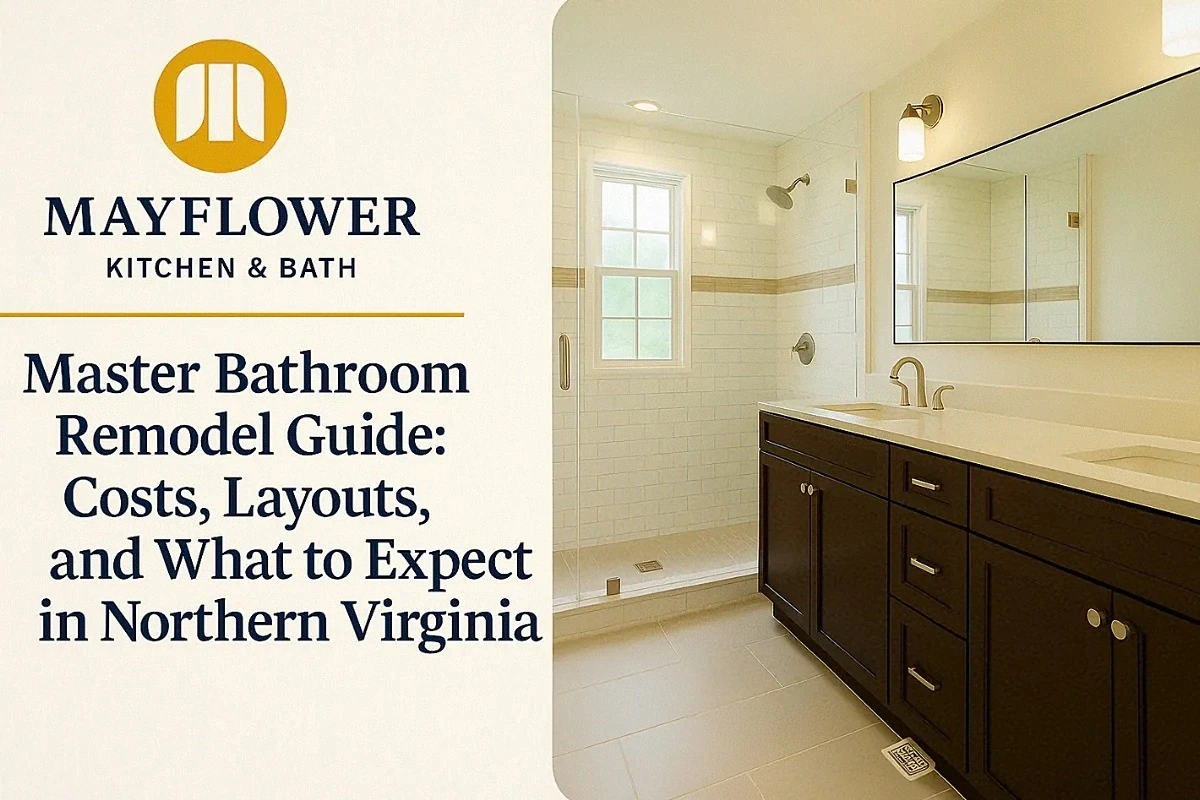
This is the most requested configuration. A curbless or low-threshold walk-in shower with frameless glass takes up one wall. A double vanity with quartz countertops anchors the opposite wall. Heated floors run throughout. This layout works well in 1970s to 1980s colonials and townhomes where space is limited but luxury finishes are a priority.
Separate Shower and Soaking Tub
Larger master suites in Great Falls, Reston, and McLean can accommodate both a walk-in shower and a freestanding soaking tub without sacrificing storage or circulation. This layout appeals to buyers looking for a spa-like experience, but requires at least 100 square feet to avoid feeling cramped.
Wet Room Style
A wet room combines the shower and main floor area into a single waterproofed zone. The entire floor slopes toward a linear drain. This European-inspired layout works well in ramblers and single-level homes where accessibility is a concern, but requires expert waterproofing and careful planning to prevent water from reaching other areas.
What Mistakes Do Homeowners Make During Master Bathroom Remodels?
Avoiding these four mistakes saves money and prevents long-term problems.
Skipping Proper Waterproofing
Cutting corners on waterproofing causes most shower failures within five years. Always use a Schluter or equivalent membrane system, even if it adds $1,500 to $2,500 to the project. The alternative is tearing out the shower and starting over.
Removing the Only Bathtub in the Home
If your master bathroom has the only tub in the house, removing it hurts resale value in Northern Virginia. Families with young children specifically look for at least one bathtub. Keep the tub in a secondary bathroom or add one elsewhere if you convert the master to a shower-only layout.
Underestimating Ventilation Needs
Oversized showers and soaking tubs generate more moisture than standard bathrooms. Install a properly sized exhaust fan (rated for the room's cubic footage) and consider a dehumidistat switch that runs the fan automatically when humidity spikes. Inadequate ventilation leads to mold growth in Northern Virginia's humid summers.
Ignoring Storage
Walk-in showers look stunning in photos, but daily use requires storage for shampoo, soap, razors, and towels. Build in recessed niches during tile work rather than relying on corner caddies. Plan for linen storage outside the shower, either in the vanity or a separate closet.
How Do You Choose the Right Contractor for a Master Bathroom Remodel?
The contractor you choose determines whether your project finishes on time, stays within budget, and holds up long-term. Look for these qualities.
Verified Licensing and Insurance
Check the contractor's license at DPOR.Virginia.gov. Verify they carry general liability and workers' compensation insurance. Never hire based on price alone; unlicensed or underinsured contractors leave you liable for injuries and code violations.
Experience with Waterproofing Systems
Ask specifically about waterproofing methods. Contractors who use Schluter, Wedi, or equivalent systems and can explain installation steps are more reliable than those who treat waterproofing as an afterthought.
Detailed Written Estimates
A legitimate estimate breaks down labor, materials, permits, and contingencies. Vague line items like "miscellaneous" or "as needed" are red flags. The estimate should also specify brands and model numbers for major fixtures so you can verify quality.
Portfolio of Similar Projects
Review completed projects similar to your scope. A contractor who specializes in cosmetic updates may not have the skills for complex layout changes or custom tile work. See finished projects in person when possible, or browse our remodeling portfolio for examples of recent work.
What Return on Investment Can You Expect?
Master bathroom remodels in Northern Virginia return 65 to 75 percent of cost at resale, according to local real estate data. Luxury finishes in homes priced above $700,000 can approach 80 percent ROI, especially in Vienna, McLean, and Great Falls where buyers expect high-end bathrooms.
The highest-return features include walk-in showers with frameless glass, double vanities with quartz countertops, and heated floors. Trendy finishes that may fall out of style (like bold tile patterns or unusual fixtures) typically return less.
Functional improvements like proper ventilation and waterproofing don't directly add resale value, but prevent costly repairs that hurt value later. Budget for these items even if they don't show up in listing photos.
Figures shown are typical ranges for Northern Virginia as of 2026 and vary based on home size, material grade, site access, and current material costs. Contact us for a free on-site estimate.
How Long Does a Master Bathroom Remodel Take?
Timeline depends on scope. A cosmetic refresh with no layout changes takes 3 to 5 weeks from demo to final inspection. Mid-range projects with minor plumbing changes run 5 to 7 weeks. Full luxury remodels with relocated plumbing and custom tile can take 8 to 12 weeks.
Permit approval adds 2 to 4 weeks to the front end in Fairfax County. Custom cabinetry and specialty tile often have 4 to 8 week lead times. Plan for these delays during design rather than discovering them mid-project.
Homes built before 1990 in Vienna, Oakton, and Falls Church may reveal unexpected issues during demo (outdated wiring, hidden water damage, asbestos-containing materials). Add 1 to 2 weeks to your timeline for older homes and budget the 15 to 20 percent contingency mentioned earlier.
Can You Remodel a Master Bathroom in Phases?
Phasing rarely makes sense for master bathrooms. Unlike kitchens, where you can replace cabinets one year and appliances the next, bathroom work requires waterproofing and tile installation to happen as a continuous process. Breaking the project into phases typically costs more due to repeated mobilization and disruption.
If budget is tight, consider scaling back the scope rather than phasing. Start with a smaller shower, stock cabinetry instead of custom, or postpone heated floors until later. These trade-offs keep the project intact while reducing upfront cost.
What Should You Decide Before Contacting a Contractor?
Three decisions speed up the estimate process and prevent miscommunication.
First, determine your budget ceiling. Contractors can design to a number, but need to know what that number is. Be honest about your maximum spend, including a contingency.
Second, decide on must-haves versus nice-to-haves. Is a freestanding tub non-negotiable, or can you redirect that budget to a larger shower? Must you have heated floors, or would upgraded tile be a better use of funds?
Third, gather inspiration images that show the style you want. A contractor can't read your mind, but can translate photos into a buildable plan. Focus on overall style (modern, traditional, transitional) rather than specific fixtures, which may not fit your layout or budget.
Key Takeaways
Ready to Start Your Master Bathroom Remodel?
A well-planned master bathroom remodel transforms your daily routine and adds measurable value to your Northern Virginia home. The key is matching scope to budget, choosing quality materials where they matter most, and working with a contractor who treats waterproofing and structural work as seriously as finishes.
Mayflower Kitchen and Bath has remodeled master bathrooms throughout Vienna, McLean, Oakton, Falls Church, Arlington, and Fairfax since 2001. We handle design, permitting, construction, and final inspection as a single point of contact. Every project includes detailed estimates, fixed timelines, and proper waterproofing systems.
Call (571) 380-7600 or book a free consultation to discuss your master bathroom remodel. We'll walk your space, answer your questions, and provide a detailed estimate with no obligation.
Frequently Asked Questions
How much does it cost to remodel a master bathroom in Northern Virginia?
Master bathroom remodels cost $30,000 to $150,000+ in Northern Virginia, depending on scope. Cosmetic updates with no layout changes start around $30,000. Mid-range projects with minor plumbing changes run $50,000 to $80,000. Luxury full-suite remodels with relocated plumbing and premium finishes range from $80,000 to $150,000+. Costs here run 25 to 40 percent above national averages due to higher labor rates and material costs.
What is the most expensive part of a master bathroom remodel?
Custom tile work in the shower typically costs the most, ranging from $8,000 to $20,000 for a walk-in shower with frameless glass. This includes waterproofing, tile installation, and glass enclosure. Custom cabinetry runs a close second at $3,000 to $15,000 for a double vanity with built-in storage. Plumbing changes add $3,500 to $6,000 if you relocate the toilet or shower.
Should I remove the bathtub in my master bathroom?
Only remove the bathtub if another bathroom in your home has one. Over 70 percent of Northern Virginia buyers prefer a large walk-in shower in the master bath, but families with young children specifically look for at least one bathtub in the house. Removing the only tub hurts resale value regardless of how luxurious your master shower becomes.
How long does a master bathroom remodel take?
Cosmetic remodels with no layout changes take 3 to 5 weeks. Mid-range projects with minor plumbing changes run 5 to 7 weeks. Full luxury remodels with relocated plumbing and custom tile take 8 to 12 weeks. Add 2 to 4 weeks for permit approval in Fairfax County and 4 to 8 weeks for custom cabinetry lead times. Homes built before 1990 should add 1 to 2 weeks for unexpected issues discovered during demo.
What return on investment can I expect from a master bathroom remodel?
Master bathroom remodels in Northern Virginia return 65 to 75 percent of cost at resale. Luxury finishes in homes priced above $700,000 in Vienna, McLean, and Great Falls can approach 80 percent ROI. Walk-in showers with frameless glass, double vanities with quartz countertops, and heated floors return the most. Trendy finishes that may fall out of style typically return less.
Do I need a permit for a master bathroom remodel in Northern Virginia?
Yes, if you're changing plumbing, electrical, or structural elements. Cosmetic updates like replacing tile or fixtures without moving plumbing typically don't require permits, but any layout change does. Fairfax County requires permits for shower relocations, new ventilation, and structural work. Permit approval takes 2 to 4 weeks. Your contractor should handle all permit applications and inspections.
What's the difference between a Schluter system and standard waterproofing?
Schluter and equivalent membrane systems create a continuous waterproof barrier under tile, while standard methods rely on water-resistant drywall and surface sealers. Membrane systems prevent water from reaching framing and subfloor even if grout or caulk fails. This prevents the mold growth and structural damage that cause most shower failures in Northern Virginia's humid climate. The membrane adds $1,500 to $2,500 but prevents a $15,000+ tear-out and rebuild later.
Can I remodel my master bathroom in phases to spread out the cost?
Phasing rarely works for bathrooms. Unlike kitchens, bathroom work requires waterproofing and tile to happen as a continuous process. Breaking it into phases costs more due to repeated mobilization and means living with an unusable bathroom between phases. If budget is tight, scale back the scope (smaller shower, stock cabinetry, postpone heated floors) rather than phasing. This keeps the project intact while reducing upfront cost.