September 23, 2026
Kitchen Remodel ROI: How Much Value Does It Add to Your Northern Virginia Home?
KITCHEN


Key Takeaways
Quartz countertops cost between $50 and $120 per square foot installed in Northern Virginia. Granite runs $40 to $100 per square foot. For a typical 60-square-foot kitchen, that's $3,000 to $7,200 for quartz and $2,400 to $6,000 for granite. Both materials can last 15 to 25 years or longer with proper care, but they differ significantly in maintenance requirements, heat resistance, appearance options, and resale appeal. This guide breaks down the real differences so you can choose the right material for your Northern Virginia kitchen renovation.
What Is Quartz and What Is Granite?
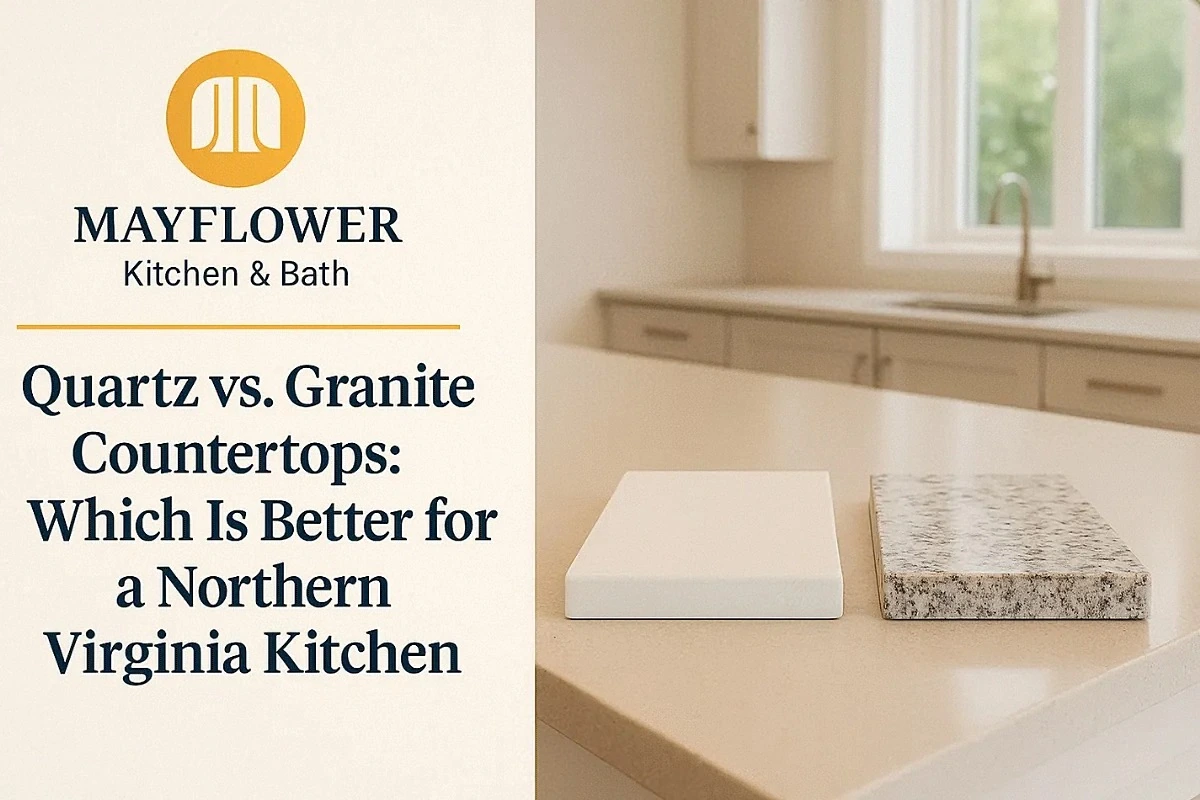
Granite is natural stone quarried from the earth. Each slab is unique, with natural variations in color, pattern, and veining. Because it's porous, granite requires annual sealing to resist stains and bacteria.
Quartz is engineered stone made from approximately 93 percent quartz crystals bound together with resin. It's manufactured in consistent patterns and colors. The resin makes quartz non-porous, so it doesn't need sealing and resists stains better than granite.
Both materials are durable enough for daily kitchen use in Northern Virginia homes, from 1970s colonials in Vienna to townhomes in Arlington and ramblers in McLean.
Quartz vs. Granite: Side-by-Side Comparison
| Factor | Quartz | Granite |
|---|---|---|
| Cost (installed) | $50–$120/sq ft | $40–$100/sq ft |
| Maintenance | No sealing required; wipe with mild soap and water | Annual sealing required; avoid acidic cleaners |
| Heat resistance | Moderate; hot pans can damage resin binder | High; better heat tolerance than quartz |
| Stain resistance | Excellent; non-porous surface | Good when sealed; porous without sealing |
| Appearance | Consistent patterns; wide color range; popular in calacatta styles | Unique natural patterns; leathered finishes trending in 2026 |
| Resale value | #1 choice for resale-focused renovations in NOVA | Strong appeal; preferred by buyers seeking natural stone |
| Lifespan | 15–25+ years | 15–25+ years |
| Best use case | Busy kitchens; low-maintenance preference; modern or transitional styles | Traditional kitchens; homeowners who value natural materials; heat-intensive cooking |
How Much Do Quartz and Granite Actually Cost in Northern Virginia?
Northern Virginia countertop costs typically run 25 to 40 percent above national averages due to higher labor rates, permit requirements in Fairfax County, and regional material availability.
For a standard 60-square-foot kitchen:
Edge profile adds to the base cost. Eased edges are standard. Waterfall edges cost an additional $500 to $1,500. Mitered edges run $800 to $2,000 extra.
Standard thickness in Northern Virginia is 3 centimeters. Two-centimeter slabs cost 15 to 25 percent less but are less durable and more prone to cracking under stress.
In 2026, some imported stone products face tariff pressure. Domestic quartz supply remains stable, which can affect lead times and pricing for certain granite slabs sourced internationally.
Figures shown are typical ranges for Northern Virginia as of 2026 and vary based on home size, material grade, site access, and current material costs. Contact us for a free on-site estimate.
Which Material Requires Less Maintenance?
Quartz requires almost no maintenance. You wipe it down with mild soap and water. It never needs sealing because it's non-porous.
Granite requires annual sealing to maintain stain resistance. Without sealing, liquids like wine, oil, and acidic foods can penetrate the stone and leave permanent marks. You also need to avoid harsh or acidic cleaners, which can strip the sealant.
For homeowners in busy Northern Virginia households who want a set-it-and-forget-it surface, quartz wins on maintenance. For those who don't mind an annual sealing appointment, granite is manageable.
Can Quartz or Granite Handle Hot Pans?
Granite has better heat resistance than quartz. You can set a hot pan on granite without immediate damage, though it's still best practice to use trivets.
Quartz is not heat-proof. The resin binder that makes quartz non-porous can scorch, discolor, or crack when exposed to high heat. If you regularly cook with cast iron or transfer pots directly from the stove, granite is the safer choice.
Both materials tolerate normal kitchen heat from warm dishes and brief contact with moderately hot items. The difference shows up with sustained high-heat exposure.
What About Appearance and Style Options?
Quartz offers consistent patterns and a wide color range. In 2026, calacatta quartz (white background with gray or gold veining) is the most requested style in Northern Virginia. You can also find solid colors, speckled patterns, and designs that mimic marble or concrete. Because quartz is manufactured, slabs match closely, which matters for large kitchens or L-shaped counters.
Granite delivers unique natural patterns. No two slabs are identical. Leathered granite finishes (a matte, textured surface) are trending in Vienna, McLean, and Great Falls in 2026. Polished granite remains popular in traditional kitchens. If you want a one-of-a-kind look, granite provides it. The tradeoff is less predictability; you need to view and approve the actual slab before fabrication.
Both materials work in modern, traditional, and transitional kitchens. Quartz leans slightly more contemporary due to its uniform appearance. Granite fits well in homes where natural materials and traditional finishes dominate.
Which One Adds More Resale Value?
Quartz is the number-one countertop choice for resale-focused kitchen renovations in Northern Virginia in 2026. Buyers expect low-maintenance, durable surfaces, and quartz delivers both without requiring ongoing care.
Granite still holds strong resale appeal, especially among buyers who prefer natural stone or traditional aesthetics. It's viewed as a premium material and adds value in homes where the overall design leans classic or rustic.
Both materials outperform laminate, tile, and lower-grade solid surface options in resale scenarios. The specific choice between quartz and granite won't make or break a sale, but choosing either one over budget alternatives will.
For a full breakdown of how kitchen upgrades affect home value in this region, see our guide on kitchen remodeling in Northern Virginia.
How Do Quartzite and Marble Compare?
Quartzite and marble are separate natural stones, both priced higher than standard quartz or granite. In Northern Virginia, quartzite and marble run $100 to $200 per square foot installed. These materials are common in luxury renovations in McLean and Great Falls.
Quartzite is harder than granite and offers a marble-like appearance with better durability. Marble is softer, more porous, and requires more maintenance than either quartz or granite. Both are niche choices compared to quartz and granite's broader market presence.
Which Should You Choose: A Decision Framework
Choose quartz if:
Choose granite if:
Both materials are durable, long-lasting, and appropriate for Northern Virginia kitchens. The right choice depends on your cooking habits, maintenance preferences, and design style.
How to Visualize Quartz and Granite in Your Kitchen
Mayflower offers online visualizer tools for both quartz and granite countertops. You can upload a photo of your kitchen or use a sample layout to preview different materials, colors, and edge profiles before committing.
These tools help you see how calacatta quartz or leathered granite will look in your specific space, under your lighting, and next to your cabinetry. It's a faster, more accurate way to narrow options than flipping through sample books alone.
Explore the full portfolio of completed kitchen projects to see how other Northern Virginia homeowners have used quartz and granite in real renovations.
What Else to Consider Before You Decide
Installation and Lead Times
Both quartz and granite require professional templating and installation. After template approval, fabrication typically takes two to three weeks. Installation is a one-day process for most kitchens. Lead times can stretch during peak remodeling seasons (spring and early summer in Northern Virginia) or if you select a less common slab that needs to be special-ordered.
Warranty and Lifespan
Quartz manufacturers typically offer 10 to 15-year limited warranties covering defects in the material. Granite is a natural product and doesn't come with a manufacturer warranty, but it lasts just as long with proper care. Both materials, when installed correctly, can serve a Northern Virginia kitchen for 15 to 25 years or more.
Environmental and Supply Considerations
Quartz production uses manufactured materials and has a consistent supply chain, mostly domestic. Granite is quarried globally, and certain colors or patterns may have longer lead times depending on quarry output and international shipping factors. In 2026, tariff policies on imported stone can affect granite availability and pricing more than quartz.
Frequently Asked Questions
Is quartz more expensive than granite in Northern Virginia?
Quartz typically costs $50 to $120 per square foot installed, while granite runs $40 to $100 per square foot. Mid-grade quartz and mid-grade granite are often priced similarly. High-end quartz can exceed granite costs, and exotic granite slabs can rival quartzite pricing.
Do I need to seal quartz countertops?
No. Quartz is non-porous and never requires sealing. Granite, by contrast, needs annual sealing to maintain stain resistance.
Can I put a hot pan on quartz?
You should not put hot pans directly on quartz. The resin binder can scorch or crack under high heat. Always use trivets. Granite handles heat better but still benefits from trivet use to avoid thermal shock.
Which countertop is better for resale value?
Quartz is the top choice for resale-focused renovations in Northern Virginia in 2026 due to its low maintenance and broad buyer appeal. Granite also adds strong resale value, especially in traditional or luxury homes.
How long do quartz and granite countertops last?
Both materials last 15 to 25 years or longer with proper care. Lifespan depends on installation quality, daily use, and maintenance habits.
What's the difference between quartzite and quartz?
Quartzite is a natural stone, harder than granite, and priced higher ($100 to $200 per square foot installed in Northern Virginia). Quartz is engineered stone made from quartz crystals and resin. They're entirely different materials despite the similar names.
Does granite stain easily?
Unsealed granite is porous and can stain from liquids like wine, oil, and acidic foods. When properly sealed, granite resists stains well. Quartz is non-porous and more stain-resistant overall.
Can I use the same countertop material for my island and perimeter counters?
Yes. Most Northern Virginia kitchens use the same material throughout for visual consistency. Some homeowners choose a contrasting material or color for the island to create a focal point, pairing quartz perimeter counters with a granite or quartzite island, or vice versa.
Final Takeaway: Choose Based on How You Use Your Kitchen
Quartz and granite are both premium countertop materials that work well in Northern Virginia kitchens. Quartz wins on low maintenance and consistent appearance. Granite wins on heat resistance and natural uniqueness. Your decision should match your cooking habits, design preferences, and how much time you want to spend on upkeep.
If you're renovating for resale, quartz is the safer bet for broad buyer appeal. If you're building your forever kitchen and value natural materials, granite delivers character you can't replicate.
Ready to see how quartz or granite will look in your space? Schedule a free consultation to review material samples, compare costs, and map out your full kitchen renovation timeline.