October 1, 2026
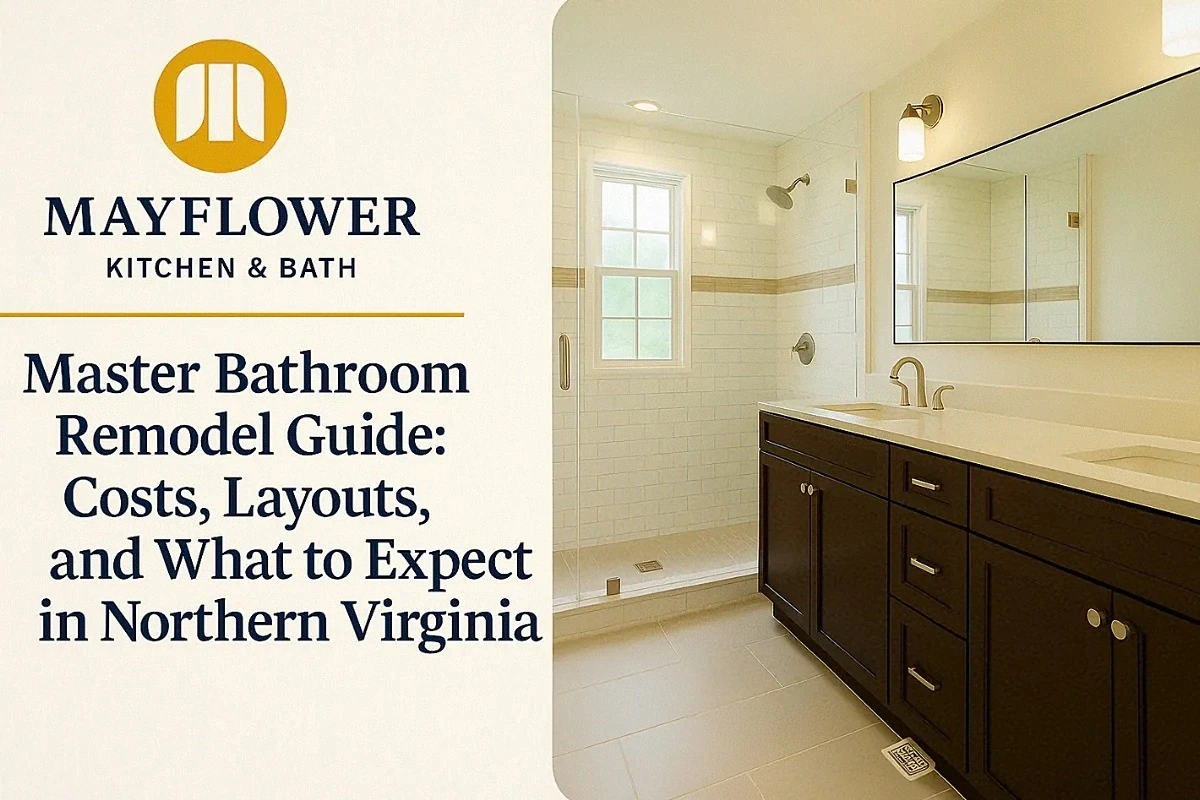
Master Bathroom Remodel Guide: Costs, Layouts, and What to Expect in Northern Virginia
BATHROOM


Key Takeaways
Most Northern Virginia homeowners converting a master bath choose a walk-in shower over a soaking tub. Buyer preference surveys show that 70 percent or more favor a large, frameless-glass walk-in shower in the primary bath. That doesn't mean you should remove every tub in your home. The right answer depends on who uses the bathroom, how many other baths you have, and whether you plan to sell within the next decade.
A tub-to-shower conversion in Northern Virginia costs between $5,000 and $15,000, depending on tile grade, glass enclosure style, and whether you're adding a curbless entry. At the lower end, you get a standard acrylic pan, mid-range porcelain tile, and a framed glass door. At the higher end, you get a zero-entry threshold, custom tile work, a frameless glass enclosure, and upgraded fixtures. Figures shown are typical ranges for Northern Virginia as of 2026 and vary based on home size, material grade, site access, and current material costs. Contact us for a free consultation.
Who Should Keep a Bathtub in Their Home?
If you have young children or plan to sell within the next five to ten years, keep at least one full bathtub in the house. Families with children under ten need a tub for bath time. Buyers with children will pass on homes without any tub, and that shrinks your buyer pool.
If you live in a single-bath home, a tub is nearly mandatory for resale. In a two-bath home, you can convert the master to a shower as long as the hall bath keeps a tub. In a three-bath or larger home, you have more flexibility, but real estate agents in Vienna, McLean, and Falls Church consistently advise keeping one tub somewhere in the house.
For households without children and no near-term sale plans, a walk-in shower in every bath works fine. Aging-in-place homeowners often prefer curbless showers for safety and accessibility, and buyers over 55 increasingly favor the same.
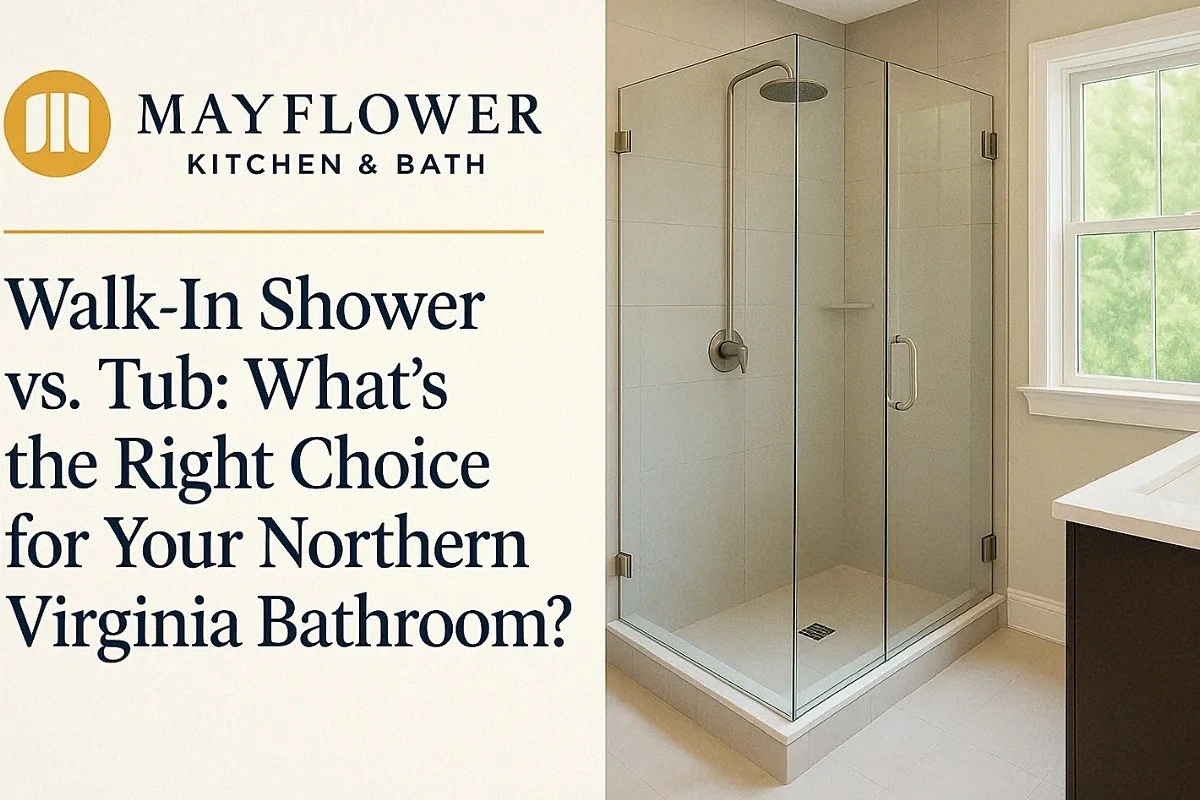
What's the Cost Difference Between a Walk-In Shower and Keeping a Tub?
Replacing an existing tub with a walk-in shower costs $5,000 to $15,000 in Northern Virginia. Refinishing or replacing a tub in place costs $1,500 to $6,000. If you're doing a full bathroom remodel and deciding between a new tub or a new shower in the same footprint, the shower typically costs $2,000 to $4,000 more because of tile labor, waterproofing membrane installation, and glass enclosure expenses.
A frameless glass enclosure adds $1,500 to $4,000 to the shower budget compared to a standard framed door. A curbless or zero-entry shower adds another $1,500 to $3,000 because it requires precise floor slope work and drain placement to meet Virginia building code requirements. The waterproofing membrane system, which prevents long-term water damage, costs $800 to $2,000 and is non-negotiable in any quality shower build.
Porcelain shower tile runs $10 to $25 per square foot installed for standard options. Custom tile, including large-format slabs or natural stone, costs $25 to $60 per square foot. A typical shower surround uses 80 to 120 square feet of tile, so material choice alone can swing the budget by several thousand dollars.
Figures shown are typical ranges for Northern Virginia as of 2026 and vary based on home size, material grade, site access, and current material costs. Contact us for a free consultation.
What Size Shower Do You Actually Need?
The minimum comfortable walk-in shower size is 36 inches by 60 inches. That's enough space for one person to move and reach controls without feeling cramped. The ideal size for a primary bath is 48 inches by 48 inches or larger. That allows room for a bench, dual showerheads, or just more elbow room.
If you're converting a standard 60-inch tub footprint, you can fit a 36-by-60-inch shower in the same space without moving plumbing. Expanding beyond that often requires relocating drain lines and possibly a vent stack, which adds $1,200 to $3,000 in plumbing costs.
Curbless showers require careful floor slope planning. Virginia building code mandates a minimum slope to the drain and specific clearances around the threshold. Not every bathroom floor can support a true zero-entry design without lowering the subfloor or raising adjacent rooms, and those structural changes add cost.
Glass Enclosure Options
Frameless glass costs more but looks cleaner and avoids the metal frame lines that visually shrink a space. Framed or semi-frameless options cost $800 to $1,800 installed and work fine in smaller budgets. Frameless enclosures run $1,500 to $4,000 and are the standard choice in higher-end Northern Virginia remodels.
If your shower is under 36 inches wide, a hinged door may not swing open comfortably. A sliding door or a neo-angle corner entry may fit better, but those options limit your glass choices and can feel more enclosed.
When Does a Freestanding Tub Make Sense?
Freestanding soaking tubs have replaced jacuzzi and jetted tubs as the luxury standard in Northern Virginia master baths. Jetted tubs are expensive to maintain, hard to clean, and rarely used. Most homeowners who install them regret it within a year. Freestanding soaking tubs cost $1,500 to $6,000 for the fixture alone, plus $1,200 to $2,500 for installation and plumbing work.
A freestanding tub works well in a large master bath where you have space for both a separate shower and a tub. If your bathroom is under 80 square feet, you'll likely have to choose one or the other. Tubs need a minimum of 60 inches of length and 30 inches of width, plus clearance on at least two sides for access and cleaning.
If you rarely take baths, don't install a tub in the master just because it looks nice in design photos. Install it in a secondary bath where children or guests will actually use it. That keeps your master layout focused on what you use daily and protects resale value by keeping one tub in the home.
What Happens When You Remove the Only Tub in the House?
Removing every bathtub in a home hurts resale value for families with young children. Real estate agents in McLean, Vienna, and Arlington consistently report that buyers with children under ten will skip showings if the listing notes no tubs. That shrinks your buyer pool and can extend time on market, even if the rest of the house is updated.
This doesn't mean you can't convert your master bath to a walk-in shower. It means you need to keep at least one bathtub somewhere in the home. If you have a hall bath or a basement bath, leave the tub there. If you're doing a full home remodel and touching multiple bathrooms, make sure one tub survives the project.
For aging-in-place homeowners or child-free households with no near-term sale plans, this rule matters less. If you're confident you'll stay in the home for 15-plus years, your daily use takes priority over hypothetical resale value a decade out.
Curbless Showers and Accessibility
Curbless or zero-entry showers eliminate the threshold you step over to enter a traditional shower. That makes them safer for aging-in-place remodels and more accessible for anyone with mobility concerns. They also look more modern and visually enlarge a bathroom by removing the barrier between the shower and the rest of the floor.
A curbless shower costs $1,500 to $3,000 more than a standard curbed entry because it requires precise floor slope and drain placement to prevent water from flooding the rest of the bathroom. Virginia building code requires a minimum slope to the drain, and not every bathroom floor can accommodate that without structural work. In older Northern Virginia homes, especially 1970s and 1980s colonials and ramblers, the floor joists may need reinforcement or the subfloor may need lowering to achieve the correct slope.
If you're considering a curbless shower, schedule an on-site consultation before finalizing your design. A qualified bathroom remodeling contractor can assess your floor structure and let you know whether a true zero-entry design is feasible without major structural changes.
Jacuzzi and Jetted Tub Removal
If you have an old jacuzzi or jetted tub, removing it costs $500 to $1,500 for demo and disposal. Most homeowners who installed jetted tubs in the 1990s and early 2000s never use them. The pumps are loud, the jets are hard to clean, and the tubs take forever to fill. Buyer preference has shifted heavily toward freestanding soaking tubs or large walk-in showers, so removing an old jetted tub no longer hurts resale.
Once the tub is out, you can convert the space to a walk-in shower, install a freestanding soaking tub, or reclaim the square footage for a larger vanity or linen closet. The plumbing rough-in is already there, so conversion costs are lower than starting from scratch.
How Long Does a Tub-to-Shower Conversion Take?
A straightforward tub-to-shower conversion takes two to three weeks from demo to final fixtures, assuming no structural surprises. That includes removing the old tub, installing the waterproofing membrane, tiling the walls and floor, installing the glass enclosure, and hooking up fixtures. If you're adding a curbless entry or relocating plumbing, add another week.
During construction, the bathroom is unusable. If this is your only full bath, plan to use a secondary bath or make temporary arrangements. Most Northern Virginia homes built in the 1970s through the 1990s have at least two full baths, so this is manageable for most households. If you're uncertain about the timeline or logistics, ask your contractor for a detailed schedule during the consultation.
Comparison: Walk-In Shower vs. Tub at a Glance
| Factor | Walk-In Shower | Bathtub |
|---|---|---|
| Cost (NOVA) | $5,000–$15,000 | $1,500–$6,000 (reglaze/replace in place) |
| Space Required | 36x60" minimum, 48x48" ideal | 60" length minimum, 30" width |
| Resale Impact | Positive in master, neutral elsewhere | Essential to keep one in the home |
| Daily Use | Faster, more practical for most adults | Required for young children, rarely used otherwise |
| Aging in Place | Curbless entry is safest option | Standard tubs require step-over, risky for mobility issues |
| Maintenance | Grout and glass cleaning | Surface refinishing every 10–15 years |
Decision Framework: Which One Should You Choose?
If you have young children or plan to sell within ten years, keep at least one tub in the home. Convert the master to a walk-in shower if you want, but leave the tub in the hall bath or another secondary bath. If you live in a single-bath home, keep the tub until your household no longer needs it daily.
If you're an empty-nest household or aging in place, a walk-in shower in the master makes sense. A curbless entry is safer and more accessible than stepping over a tub edge. If you have a large master bath and genuinely enjoy soaking, add a freestanding tub in addition to the shower rather than choosing one or the other.
If you're unsure, walk through your current daily routine. How often do you actually use the tub? If the answer is less than once a month, a walk-in shower will serve you better. If you have toddlers or young children, the tub is non-negotiable somewhere in the home. If you're planning to sell within five years, ask a local real estate agent what buyers in your neighborhood expect before making a final call.
Ready to Make the Call?
Choosing between a walk-in shower and a bathtub comes down to who uses the bathroom, how many other baths you have, and whether you plan to sell. Most Northern Virginia master baths favor walk-in showers, but keeping one tub somewhere in the home protects resale value and serves families with children. If you're still weighing your options or want to see what fits your space and budget, schedule a free consultation to walk through your layout and get a detailed estimate. You can also browse recent bathroom remodeling projects to see how other Northern Virginia homeowners solved the same decision.
