

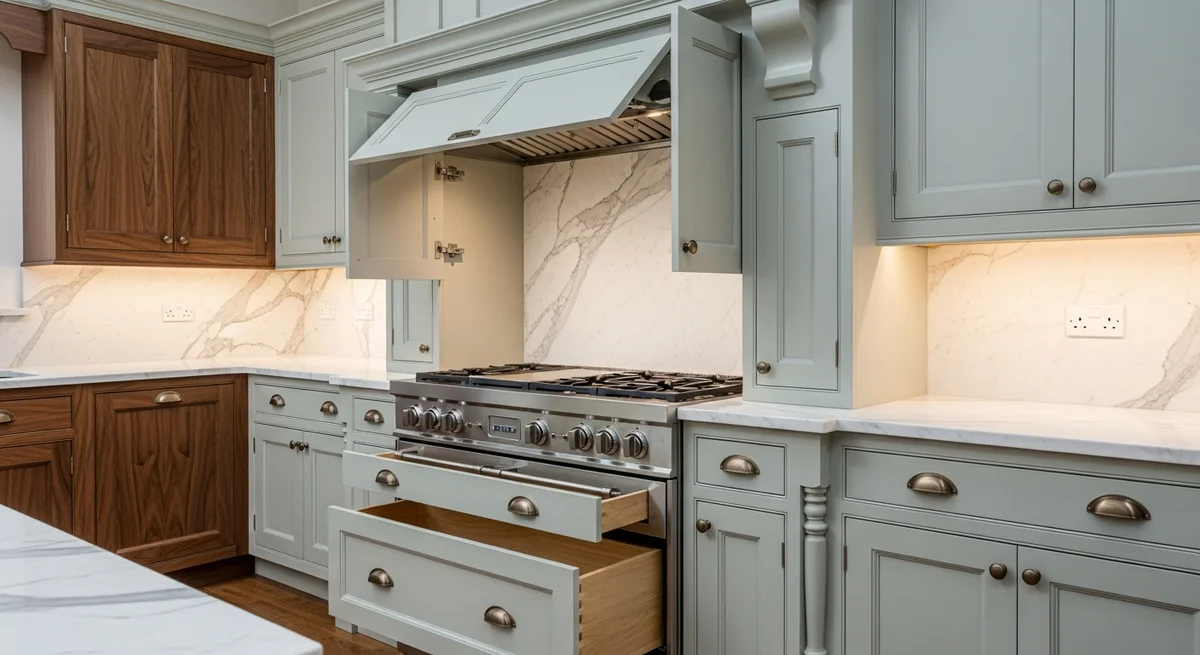
Cabinets are the most expensive part of redoing a kitchen. They typically take up 29% to 40% of your total remodel budget. For an average kitchen renovation, that means you could spend $15,000 or more on cabinetry alone. The reason is simple: cabinets cover more surface area than any other element in your kitchen, and they require quality materials, skilled labor, and often custom work.
But cabinets are not the only big-ticket item. Appliances, countertops, and labor costs follow close behind. Understanding where your money goes helps you plan smarter, set realistic expectations, and avoid surprises along the way.
In this guide, we will break down the most expensive kitchen remodeling elements, explain why cabinets cost so much, and share practical tips for allocating your budget across major components.
Why Cabinets Are the Most Expensive Kitchen Element
Walk into almost any kitchen, and the first thing you notice is the cabinetry. Cabinets line the walls. They frame the appliances. They set the entire tone for the space. Because of their size and importance, they naturally become the biggest expense.
The Scale Factor
Cabinets take up the most real estate in your kitchen. Upper cabinets, lower cabinets, pantry units, islands with storage. It adds up fast. The sheer volume of material required to build and install all those boxes, doors, and drawers drives up costs significantly.
Craftsmanship and Materials
Quality cabinets require quality materials. Solid wood costs more than particle board. Plywood construction lasts longer than MDF. Soft-close hinges, dovetail joints, and durable finishes all add to the price. You are not just paying for wood. You are paying for engineering, durability, and design.
Customization Options
Cabinets come in three main tiers:
- Stock cabinets: Pre-made in standard sizes. Most affordable at $100 to $400 per linear foot installed.
- Semi-custom cabinets: Offer more flexibility in size, style, and finishes. Range from $150 to $700 per linear foot.
- Custom cabinets: Built from scratch to fit your exact specifications. Start at $500 and can exceed $1,200 per linear foot.
The more customization you want, the higher the price. Custom cabinets require skilled craftsmen, longer lead times, and premium materials. Schedule a free consultation to discuss your cabinet options.
How Much of Your Budget Should Go to Cabinetry?
Industry guidelines from the National Kitchen and Bath Association suggest that cabinets should account for about 29% of your total kitchen remodel budget. Some projects run higher, closer to 40%, especially when homeowners choose custom cabinetry or high-end finishes.
Here is a simple way to think about it:
| Total Remodel Budget | Cabinet Budget (29% to 40%) |
|---|---|
| $30,000 | $8,700 to $12,000 |
| $50,000 | $14,500 to $20,000 |
| $75,000 | $21,750 to $30,000 |
| $100,000 | $29,000 to $40,000 |
If you are working with a kitchen remodeling contractor in Northern Virginia, they can help you determine the right balance based on your goals, kitchen size, and desired finishes.
What Makes Kitchen Cabinets So Costly?
Several factors combine to make cabinets the priciest element in most kitchen remodels.
Material Choices
The wood species you choose has a major impact on price:
- Oak and maple: Popular mid-range options. Durable and widely available.
- Cherry and walnut: Premium hardwoods with rich grain patterns. Cost significantly more.
- MDF and laminate: Budget-friendly alternatives. Good for painted finishes but less durable over time.
Construction Quality
Not all cabinets are built the same way. Higher quality construction includes:
- Plywood box construction (stronger than particle board)
- Dovetail drawer joints (more durable than stapled joints)
- Soft-close hinges and drawer glides
- Full-extension drawers for easier access
These features cost more upfront but last longer and perform better.
Finish and Style
A simple shaker-style door costs less than an ornate raised-panel design. Painted finishes require more labor than stained wood. Glazing, distressing, and specialty finishes all add to the final price.
Installation Complexity
Installing cabinets is not a weekend DIY project. It requires precision, leveling, and often modifications to fit your exact space. Professional installation typically runs $50 to $200 per linear foot on top of the cabinet cost itself.
Are There Ways to Reduce Cabinet Costs Without Sacrificing Quality?
Yes. You do not have to choose between cheap cabinets and budget-busting custom work. Here are some smart strategies:
Consider Cabinet Refacing
If your existing cabinet boxes are in good condition, refacing can save thousands. This involves replacing the doors and drawer fronts while keeping the original structure. Refacing typically costs $4,500 to $7,000, compared to $15,000 or more for full replacement.
Choose Stock or Semi-Custom Over Full Custom
Stock and semi-custom cabinets have improved dramatically in recent years. Many offer soft-close features, durable construction, and attractive styles at a fraction of the custom price.
Skip the Specialty Features
Pull-out spice racks, built-in wine storage, and custom inserts look great but add up quickly. Start with the basics and add specialty features later as your budget allows.
Paint Instead of Stain
Painted cabinets allow you to use less expensive materials like MDF, which takes paint beautifully. This can reduce material costs while still delivering a polished, modern look.
Work With a Local Expert
A kitchen remodeling contractor who knows your area can recommend suppliers, spot deals, and help you get the most value from your cabinet budget. See examples of our cabinet work in our project portfolio.
What Is the Second Most Expensive Part of a Kitchen Remodel?
After cabinets, the next biggest expense is typically appliances or labor, depending on your project scope.
Appliances
New kitchen appliances typically cost $4,000 to $12,000 as a package. This includes a refrigerator, range or cooktop, dishwasher, microwave, and possibly a vent hood. High-end or professional-grade appliances can push this number much higher.
Appliances usually account for about 14% to 20% of a kitchen remodel budget.
Labor and Installation
Labor costs make up a significant portion of any kitchen remodel. According to industry data, labor represents about 17% to 35% of the total project cost, depending on the complexity.
Labor-intensive tasks that drive up costs include:
- Moving plumbing or gas lines
- Relocating electrical outlets
- Structural changes like removing walls
- Custom tile work for backsplashes
- Cabinet installation and trim carpentry
In Northern Virginia, skilled labor is in high demand. Hiring experienced professionals ensures the job is done right, but it also means budgeting appropriately for their expertise. Learn more about setting a realistic kitchen remodel budget.
Do Countertops or Cabinets Cost More?
Cabinets almost always cost more than countertops in a typical kitchen remodel.
Cabinets: 29% to 40% of Budget
As we covered, cabinets are the largest single expense because of their size, materials, and labor requirements.
Countertops: 10% to 15% of Budget
Countertops typically account for 10% to 15% of your total remodel budget. For an average project, that translates to $2,000 to $6,000, though premium materials like marble or exotic granite can push costs higher.
Here is a quick comparison of common countertop materials:
| Material | Cost Per Square Foot (Installed) |
|---|---|
| Laminate | $20 to $50 |
| Butcher Block | $40 to $100 |
| Granite | $50 to $200 |
| Quartz | $50 to $150 |
| Marble | $75 to $250 |
If you are exploring options, check out our quartz countertops visualizer to see how different styles might look in your space.
What Percentage of Total Cost Goes to Labor Versus Materials?
The split between labor and materials varies by project, but here are some general guidelines:
Typical Kitchen Remodel Breakdown
- Materials: 60% to 70% of total cost
- Labor: 30% to 40% of total cost
Some sources put labor even higher, at 50% to 60%, especially for complex projects that involve structural changes, plumbing relocation, or custom work.
What Drives Labor Costs Up?
- Changing the kitchen layout
- Moving plumbing, gas, or electrical lines
- Installing custom tile backsplashes
- Building custom cabinetry on-site
- Removing walls or adding windows
What Drives Material Costs Up?
- Custom or semi-custom cabinets
- Premium countertop materials like marble or quartzite
- High-end appliances
- Hardwood flooring
- Specialty lighting and fixtures
If you want to keep labor costs in check, try to maintain your existing layout. Moving the sink, stove, or refrigerator to new locations requires extensive behind-the-scenes work that adds up fast.
Should You Splurge on Cabinets and Save Elsewhere?
This is a smart approach for many homeowners. Here is why:
Cabinets Set the Tone
Your cabinets are the most visible element in your kitchen. They establish the style, color palette, and overall feel of the space. Investing in quality cabinets creates a strong foundation.
Cabinets Get Daily Use
You open and close cabinet doors dozens of times a day. Quality hinges, solid construction, and durable finishes hold up better over time. Cheap cabinets can start to sag, warp, or fall apart within a few years.
You Can Upgrade Other Elements Later
Countertops, backsplashes, and appliances can be upgraded down the road without major disruption. Replacing cabinets later requires tearing out countertops, backsplashes, and often flooring. It is a much bigger job.
Where to Save Without Sacrificing Quality
- Appliances: Mid-range appliances from reputable brands offer excellent performance without the premium price tag.
- Flooring: Luxury vinyl plank looks great, is durable, and costs far less than hardwood.
- Lighting: Basic recessed lights and affordable pendant fixtures can be swapped out later.
- Hardware: Cabinet pulls and knobs are easy to upgrade after the initial remodel.
How Much Do Custom Cabinets Add to the Overall Cost?
Custom cabinets can easily add $10,000 to $20,000 or more to your kitchen remodel compared to stock or semi-custom options.
Custom Cabinet Pricing
Custom cabinets typically cost $500 to $1,200 per linear foot installed. For a kitchen with 25 linear feet of cabinetry, that translates to $12,500 to $30,000 just for the cabinets.
When Custom Cabinets Make Sense
- You have an unusual kitchen layout that does not fit standard sizes
- You want specific materials, finishes, or construction methods
- You are building a high-end home where custom details are expected
- You plan to stay in your home for many years and want maximum durability
When They May Not Be Worth It
- You are on a tight budget
- You plan to sell within a few years
- Your kitchen has a standard layout that works with stock sizes
Semi-custom cabinets often hit the sweet spot. They offer more flexibility than stock options at a lower price than full custom. Our kitchen remodeling team can help you find the right balance for your budget.
How Can You Allocate Your Budget Across Major Kitchen Components?
Planning your budget in advance helps you avoid overspending in one area and running short in another. Here is a general framework based on industry guidelines:
Budget Allocation for a Kitchen Remodel
| Category | Percentage of Budget |
|---|---|
| Cabinets | 29% to 40% |
| Labor and Installation | 17% to 35% |
| Appliances | 14% to 20% |
| Countertops | 10% to 15% |
| Flooring | 5% to 10% |
| Lighting | 3% to 5% |
| Backsplash | 3% to 5% |
| Fixtures and Hardware | 2% to 4% |
| Contingency | 5% to 10% |
The contingency fund is important. Unexpected issues like hidden water damage, outdated wiring, or structural problems can pop up once demolition begins. Setting aside 5% to 10% gives you a buffer. Read more about the 30% rule for renovations.
What Kitchen Elements Offer the Best Return on Investment?
Not all kitchen upgrades deliver the same value when it comes time to sell. Here are the elements that consistently perform well:
High-ROI Kitchen Upgrades
- Minor kitchen remodel: Returns up to 113% ROI according to the 2025 Cost vs. Value Report
- Cabinet refacing: Returns up to 96% of the investment
- Energy-efficient appliances: Appeals to buyers and reduces utility costs
- Updated countertops: Quartz and granite offer strong visual impact and durability
- Quality flooring: Durable options like tile or luxury vinyl add value without huge expense
Lower-ROI Kitchen Upgrades
- Major upscale remodels: Return only 50% to 60% of the investment
- Highly personalized designs: Custom features that appeal only to your taste may not resonate with buyers
- Over-improving for the neighborhood: A $100,000 kitchen in a $300,000 home will not pay off
The key is matching your upgrades to your neighborhood and your long-term plans. If you plan to sell within a few years, focus on broad-appeal improvements. If you are staying for the long haul, invest in what makes your daily life better.
For guidance on balancing your investment with your home's value, read our guide on the 30% rule for renovations.
Practical Tips for Managing Kitchen Remodel Costs
Here are some final strategies to help you get the most from your kitchen remodel budget:
Get Multiple Quotes
Talk to at least three contractors. Compare not just price, but also scope, timeline, and what is included. The lowest bid is not always the best value.
Prioritize Function Over Trends
Focus on what will make your kitchen work better for your daily life. Trendy finishes come and go, but good layout and quality construction last.
Do Not Move Plumbing Unless Necessary
Moving the sink, dishwasher, or refrigerator to new locations adds significant cost. If your current layout works, keep it.
Phase Your Project If Needed
You do not have to do everything at once. Start with cabinets and countertops, then tackle flooring, lighting, or appliances as your budget allows.
Work With Experienced Professionals
A skilled kitchen and bath remodeling team can help you avoid costly mistakes, find quality materials at fair prices, and keep your project on track. Browse our completed projects to see our work.
Final Thoughts
Cabinets are the most expensive part of a kitchen remodel for good reason. They cover the most space, require quality materials, and demand skilled installation. But understanding where your money goes puts you in control.
Plan your budget carefully. Allocate 29% to 40% for cabinets, 10% to 15% for countertops, 14% to 20% for appliances, and do not forget about labor and contingency funds. Look for smart ways to save, like choosing semi-custom cabinets or refacing existing ones, without sacrificing quality.
Ready to start planning your kitchen remodel? Contact Mayflower Kitchen and Bath to schedule a consultation. Our team serves homeowners throughout Northern Virginia, helping you create a beautiful, functional kitchen that fits your budget and lifestyle.